

Portfolio → Case Studies → From DIY Flashcards to a Professional Teaching System – How Macomb Tutoring Turned a Homegrown Idea Into a Real Product
Case Study
From DIY Flashcards to a Professional Teaching System – How Macomb Tutoring Turned a Homegrown Idea Into a Real Product
Background
Macomb Tutoring, LLC works with students in grades 1 through 12 across all foundational school subjects. They also work with students who have learning disabilities in reading and mathematics, along with students who have school accommodations for ADHD. It’s specialized, detail-oriented work – and they’ve been doing it long enough to know what actually helps kids learn.
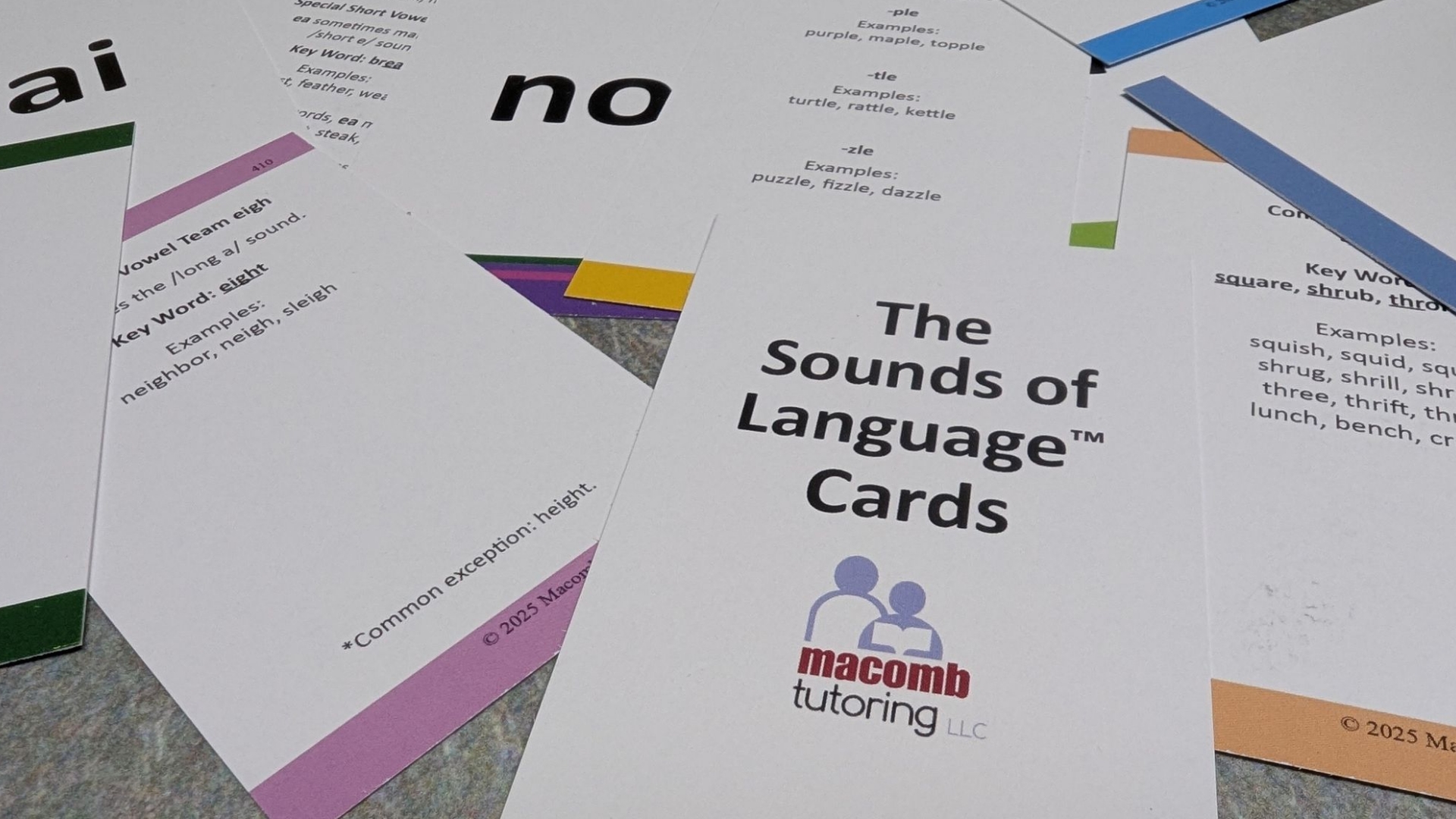
One of their most effective tools was a set of language cards called The Sounds of Language™. These cards break down phonics concepts – vowel teams, consonant blends, diphthongs, syllable types – into individual reference cards that tutors and students can use during sessions. The problem? They’d been designing them in Microsoft Word and printing them on regular paper. The cards worked, but they looked like what they were: a DIY solution held together by good intentions.
Macomb Tutoring came to Fusion through a referral, looking for help turning their concept into something more polished. What they got was a complete product development process.
The Challenge
The cards had real educational value. That wasn’t the issue. The issue was that 140 individual card designs – each with different content, phonics rules, examples, and key words – had been built one at a time in Word without a unifying system. Colors weren’t consistent. Layouts shifted from card to card. There was no structure that made it easy to find a specific card mid-session, and no framework that would allow the deck to grow without starting from scratch every time.
For a tutoring company that works with students who have learning disabilities, that kind of inconsistency isn’t just an aesthetic problem. It’s a usability problem. Students who struggle with reading need tools that are predictable and visually organized. A card set that looks different every time you flip to a new one adds friction where there shouldn’t be any.
And practically speaking, printing Word documents on paper meant the cards were fragile. They weren’t built to survive daily use in tutoring sessions with kids.
The Approach
This wasn’t a project where we could just make the existing designs look nicer. The scope called for rebuilding the entire system from the ground up – 140 cards, each with unique content, organized into a structure that made sense both educationally and visually.
We started on paper. Rough sketches to work out the layout grid, figure out where content types would live on each card, and establish a visual hierarchy that would stay consistent across every single design. Key words, examples, phonics rules, and notes all needed a home that didn’t shift around.
From there, we moved into Adobe Illustrator and Adobe InDesign. Illustrator handled the design system – the color coding, graphic elements, and card template architecture. InDesign handled the production files, letting us manage 140 unique layouts while keeping the underlying structure locked in. The color-coding system was a critical strategic decision. Each phonics category got its own color band, so tutors and students can find what they need at a glance without flipping through the entire deck.
The whole process took about 12 months. That timeline wasn’t about delays – it was about getting 140 designs right. Every card needed accurate linguistic content, consistent formatting, and a layout that worked for the students actually using them. We plotted out the system, built it in stages, and managed print production for the first batch.
The Work
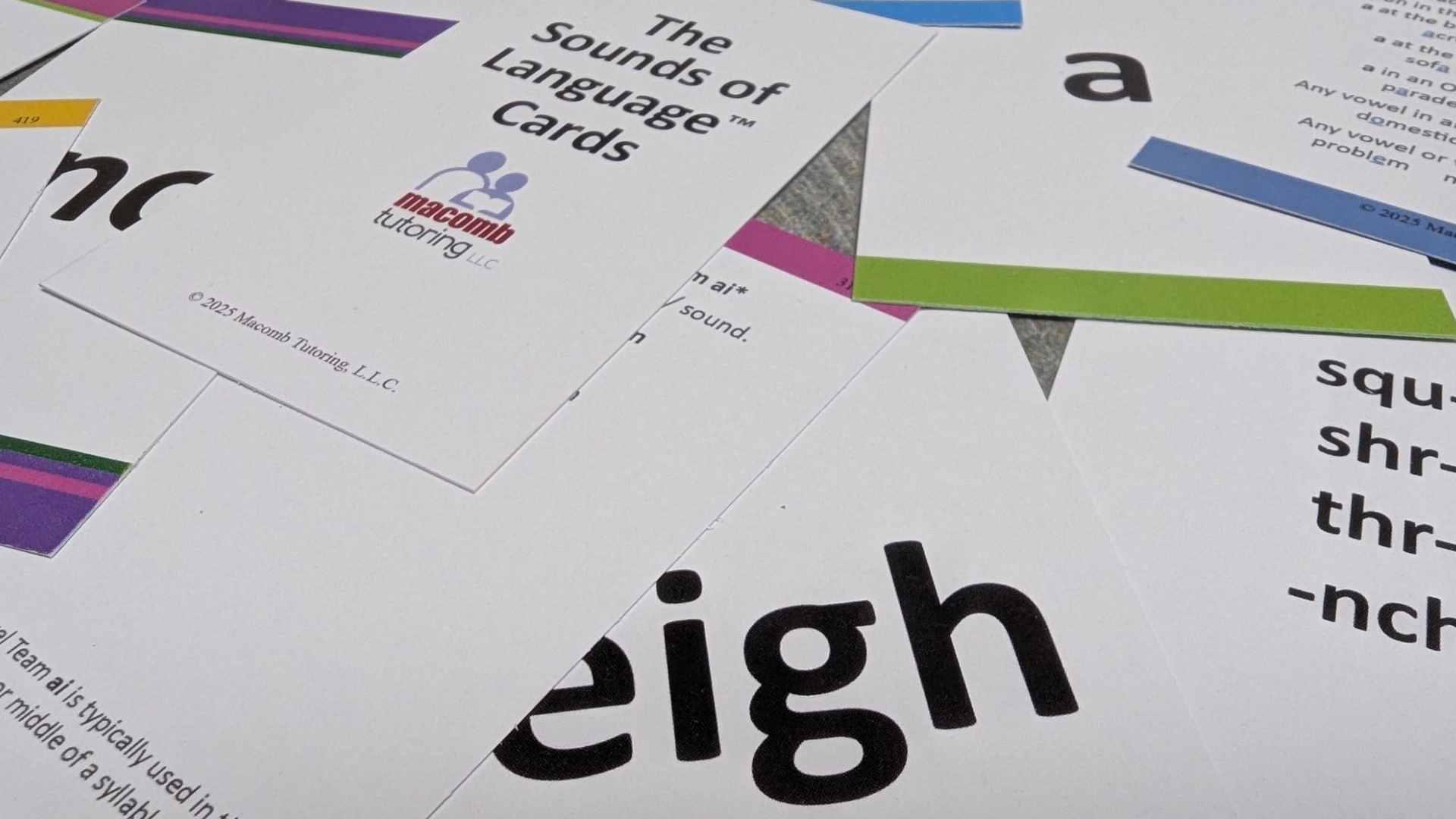
14,000 cards were initially printed.
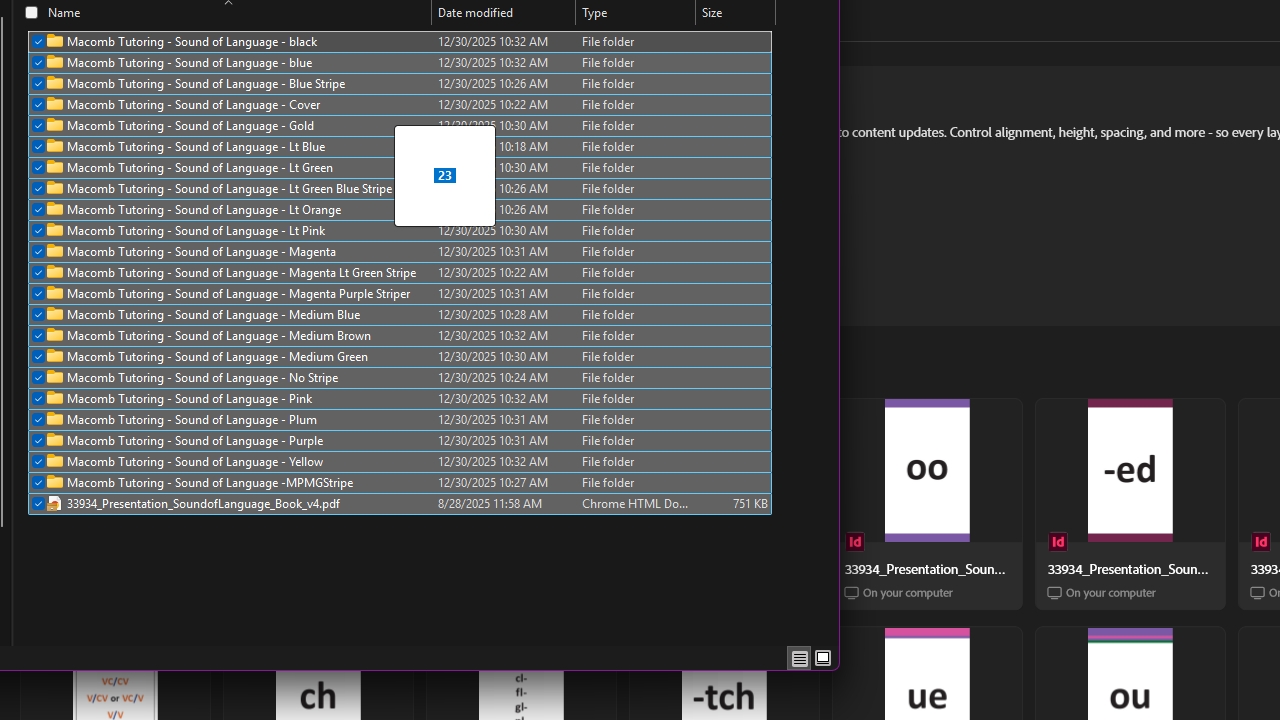
All decks were broken down by color.
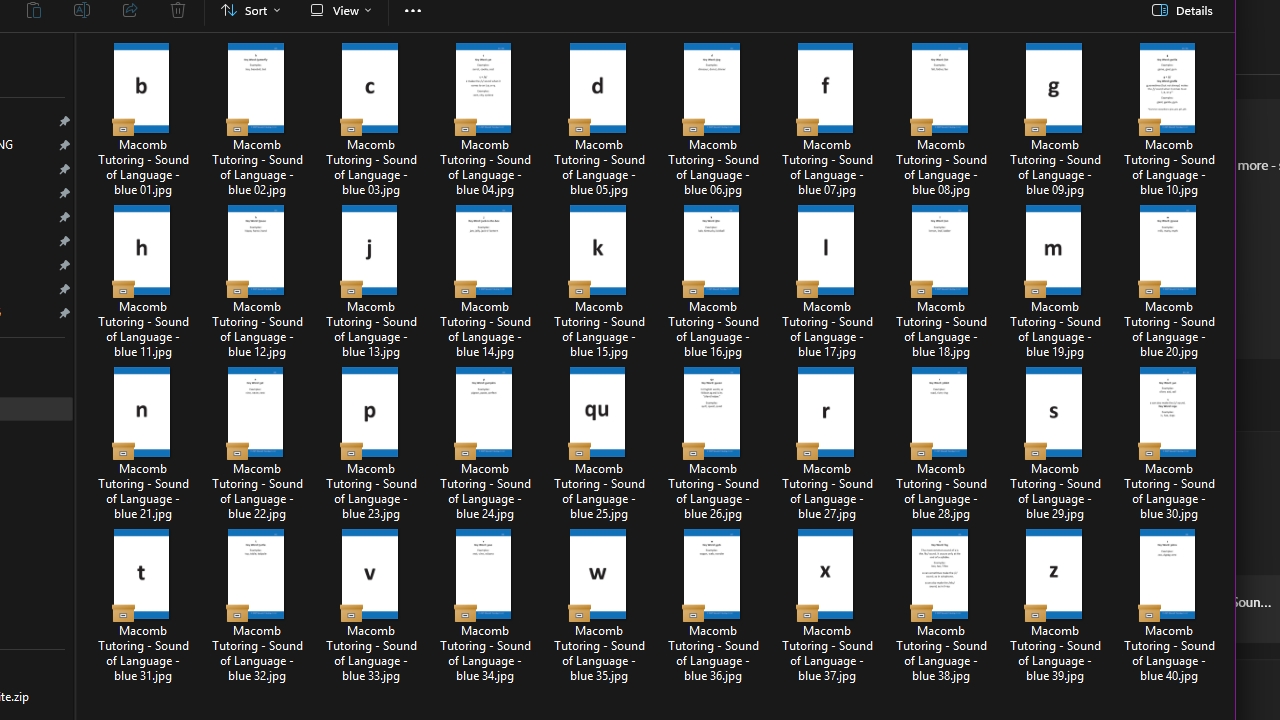
134 individual assets were included in this project.
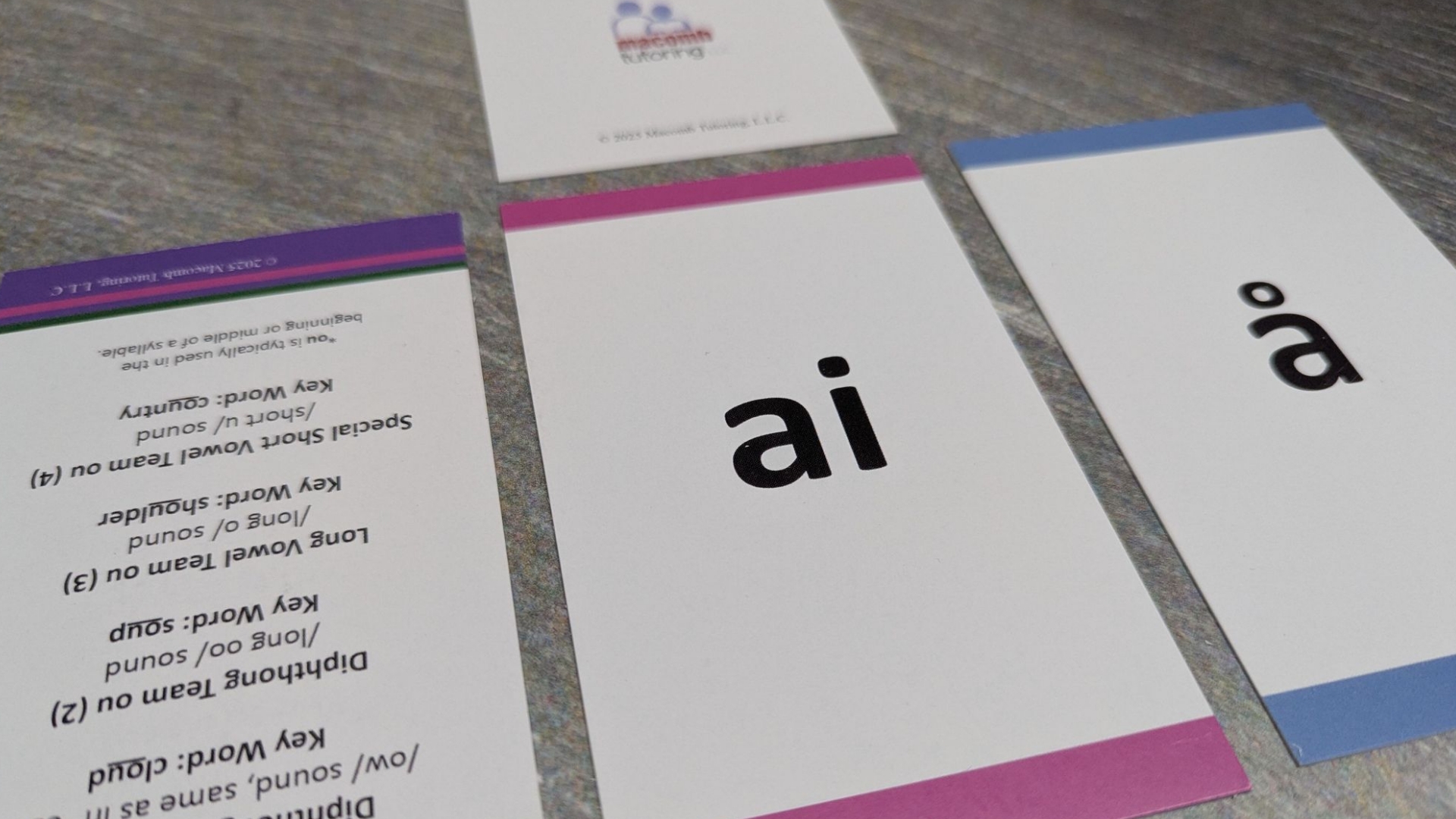
Fonts were carefully chosen for legibility.
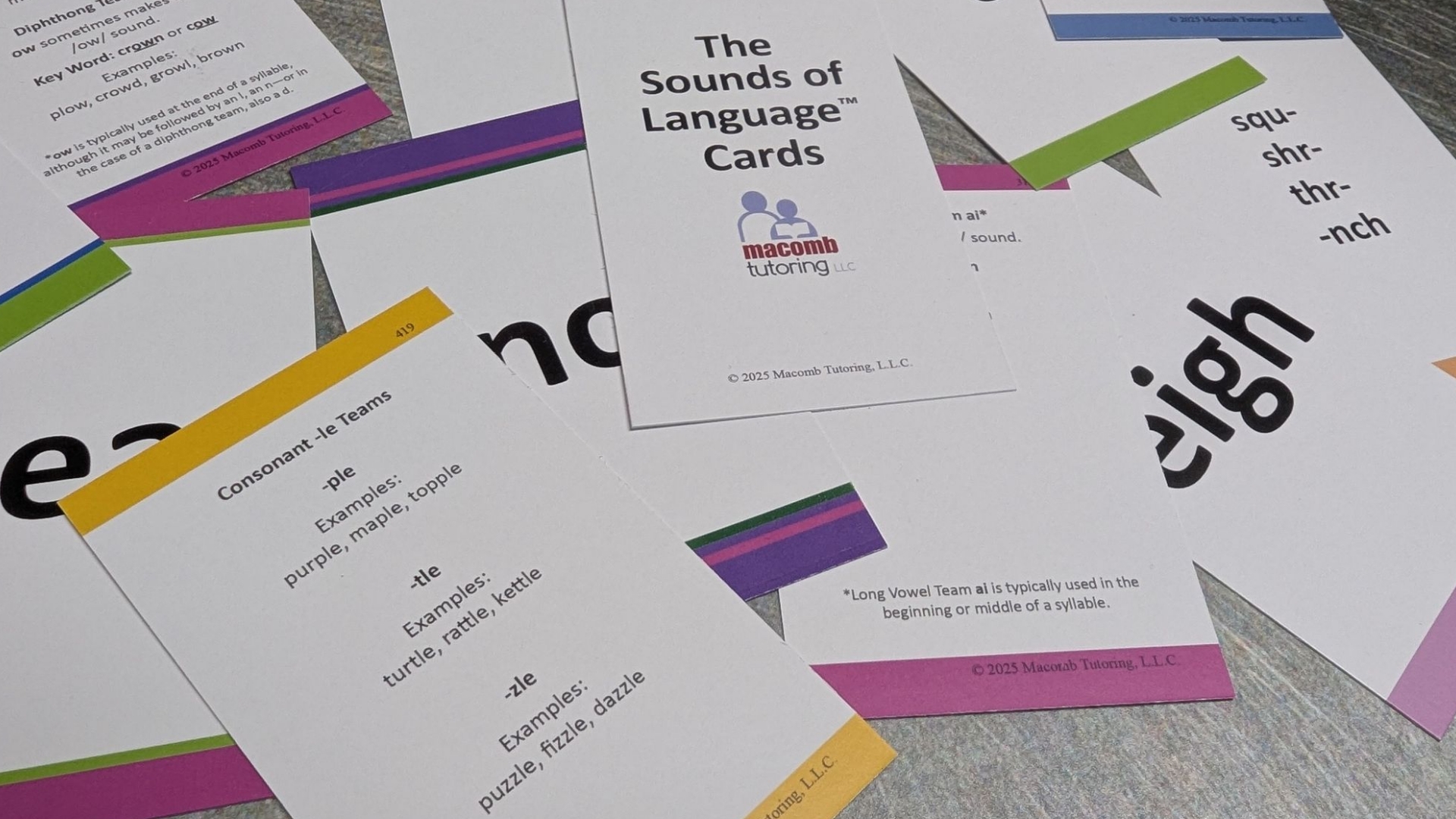
Band colors allow tutors and students to navigate quickly.
The Outcome
Macomb Tutoring now has a professional teaching product that didn’t exist before. Not a prettier version of what they had – an entirely different thing.
The Sounds of Language™ Cards are a real, printed, color-coded card system that tutors can pull from during sessions and students can reference on their own. They’re durable. They’re organized. They look like a product you’d find on a shelf, not something printed in a home office.
More importantly, the system is built to expand. Because we established a design framework – templates, color logic, layout grids – new cards can be added without rethinking the entire deck. If Macomb Tutoring wants to add a new phonics category or expand into a different subject area, the foundation is already there. That was the whole point. We didn’t just design 140 cards. We designed a system that produces cards.
The relationship is ongoing, and the first batch is in the hands of tutors and students. What started as a referral and a stack of Word documents turned into a year-long product development partnership.
What's Next
We continue to work with Macomb Tutoring as the card system evolves. The framework we built together is designed to grow with their curriculum – new card sets, expanded categories, and refinements based on how tutors and students are actually using them.