
Portfolio → Case Studies → How Urban Seed Grew from Mutual Aid Garden to a Two-Site, Award-Winning Nonprofit
Case Study
How Urban Seed Grew from Mutual Aid Garden to a Two-Site, Award-Winning Nonprofit
Client
Urban Seed
Industry
Main Services
Timeline
Pro bono support since 2012
Background
Urban Seed’s flagship community garden launched in Eastpointe, Michigan in 2012 as a mutual aid project. In 2023, it formally became a 501(c)(3). In 2025, a second location opened in South Warren. Across all of it, Fusion has donated brand, design, technology, and storytelling support as ongoing community giving.
There’s a personal layer worth naming here. Fusion’s owner was one of the founding members of the Eastpointe Community Garden in 2012, and the concept for Urban Seed (an umbrella organization that could scale beyond a single location) took shape during those early conversations. He currently serves on the Urban Seed executive board. That history is why the partnership runs as deep as it does, and why every Fusion resource has been donated since day one.
The garden itself runs in four zones. A 24-hour u-pick area where anyone can grab food. Rental beds for community members who want to grow their own. A giving garden where volunteers grow food specifically for community donation. And a native space planted with Michigan and Midwest natives to support pollinators. It’s the kind of place that lives or dies by volunteer momentum and donor trust.
That’s where good branding, clear storytelling, and real infrastructure stop being a nice-to-have and start being how the mission actually gets funded.
The Challenge
Running a 100% volunteer nonprofit means every dollar saved is a dollar that can go toward seeds, soil, and tools instead. Brand and operational infrastructure usually sit at the bottom of the priority list. Urban Seed faced a familiar squeeze. The kind of polished presentation that wins grants and earns donor trust costs money the organization couldn’t justify spending. Without it, the work stayed invisible to the people who could fund the next chapter.
There was a second layer to the problem. Urban Seed’s identity was built on mutual aid. Scrappy, community-first, the kind of place where everyone is welcome and nothing feels corporate. That spirit had to stay intact. A glossy, sanitized rebrand would have stripped away the thing that made the organization meaningful in the first place. The brand needed to look credible enough to win institutional support without losing the soul that made it worth supporting.
And then there was the operational layer. How do you prove to a foundation that your volunteers are logging thousands of hours, that hundreds of pounds of food are leaving the garden each season, that the work is real and measurable, when no one is being paid to track it?
The Approach
What started as informal design help in the early mutual aid days has grown into a layered, multi-year partnership across three distinct phases.
Phase One: Foundation
Through the mutual aid era from 2012 through 2020, we kept things lightweight to match a lightweight organization. Flyers, signage, social media graphics, and whatever else the garden needed to recruit volunteers and tell the story locally. The work was about visibility, not polish. Tools and process stayed simple, but the relationship was being built one project at a time.
Phase Two: Brand Voice and Storytelling
2021 was the turning point. We cleaned up the wordmark, locked in a Pantone palette, and built a small brand package. The goal wasn’t to corporate-ify Urban Seed. The goal was to give the existing aesthetic a stronger backbone (readable across signage, merchandise, and digital) while keeping the playful, hand-drawn feel that made it belong to the community.
In the same window, we took over the social media and made storytelling the center of the strategy. Instead of generic “volunteer with us” posts, every week became a real story. Boots in the dirt. Kids on the harvest. Volunteers showing up in the rain. The garden as a place worth caring about, told by someone who was actually there.
The numbers tell the story of what changed. Before 2021, Saturday workdays at the Eastpointe garden typically saw 3 or 4 volunteers. Today, Saturday workdays regularly draw 20 to 40 volunteers depending on the time of year.
When Urban Seed formally became a 501(c)(3) in 2023, the communications layer had to scale up to match. We supported the transition with the storytelling assets, visual consistency, and supporting documentation a formal nonprofit needs to operate, file, and fundraise.
Phase Three: Infrastructure and Tools
From 2024 forward, the partnership got significantly more ambitious as we shifted from creative support to building the systems that scale the mission.
We rebuilt the website from the ground up as a real content hub. Mission, programs, events, plant guides, blog, and dedicated pages for each garden location. We partnered with Earthly Analytics (another Fusion client) to develop the first version of a custom Impact Dashboard, then completely rebuilt the system in-house at Fusion to expand its capabilities. The dashboard tracks money in and out, expenses, food grown and harvested by individual garden bed location, weather data, estimated donation value, volunteer hours, and families served through produce distribution. Volunteers log activity through a custom app we built, and everything updates in real time on the public-facing dashboard. Donors and foundations can see exactly what the organization is doing the moment it happens.
When the South Warren Community Garden opened in 2025, we deployed a visual and editorial framework so both locations could operate under one brand without losing their individual identities. Shared fonts, color logic, signage standards, imagery rules, and a first-person weekly recap format that lets each garden document what happened that week from the perspective of someone who was actually there.
The most distinctive piece of this phase came in early 2026. When the South Warren Community Garden’s lease negotiations stalled with the City of Warren, the organization needed a way to mobilize community support fast. We built a custom email advocacy tool that any resident could use. Fill out a short form, and the system automatically sent the message to the Mayor, every member of City Council, and more than a dozen regional reporters on the sender’s behalf. Within two weeks, more than 130 emails went out. On May 6, 2026, the Warren City Council unanimously approved a 10-year lease for the garden. The tool did two jobs at once. It gave neighbors a frictionless way to speak up, and it kept local media inside the story in real time as it played out.
Throughout all three phases, we’ve continued to handle photography and editing for the website and social media, manage social channels, print and donate flyers and event collateral, and donate hosting. Whatever Urban Seed needs to keep growing flows through our team.
The Work
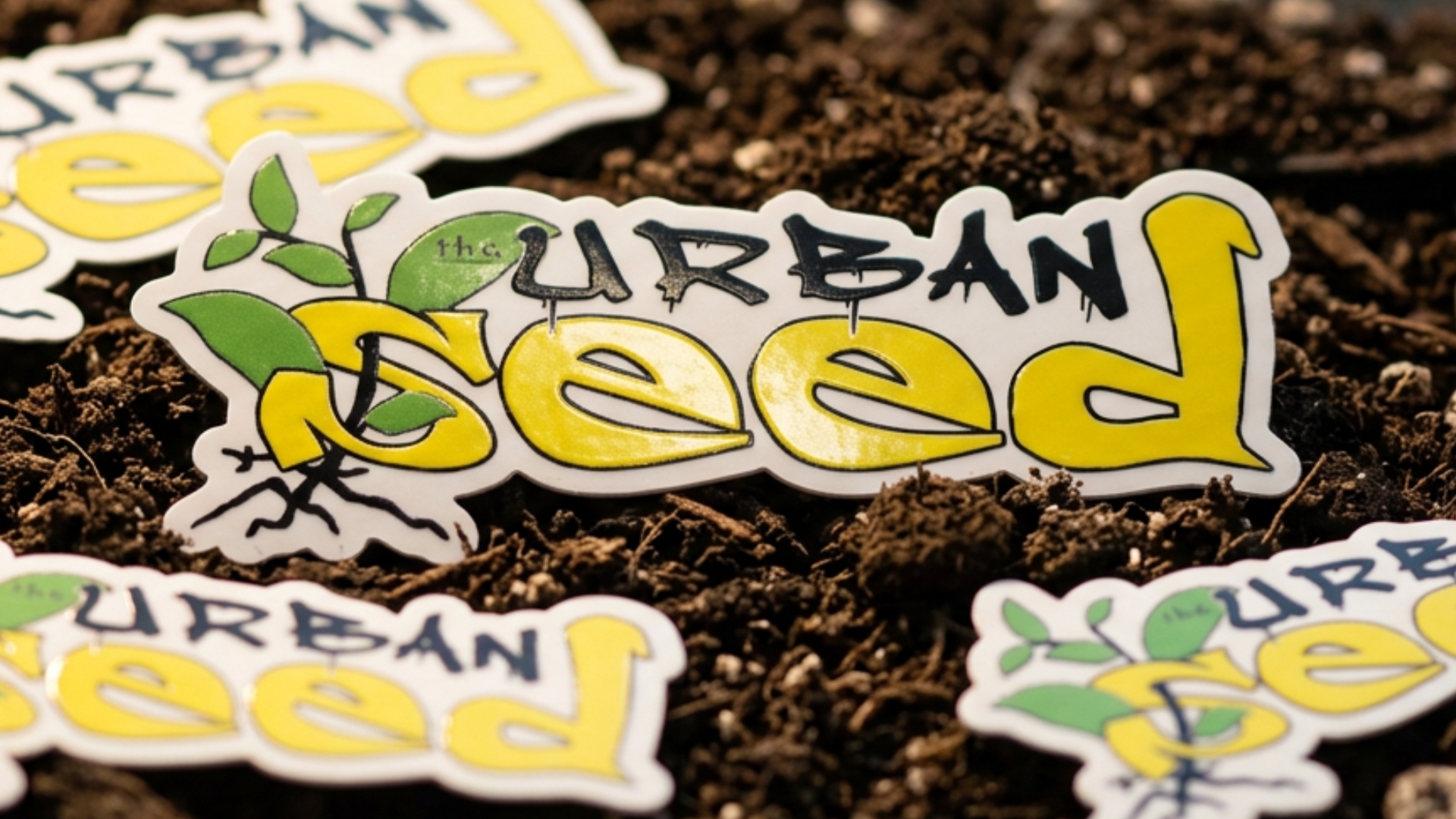
Imperfectly perfect logo design
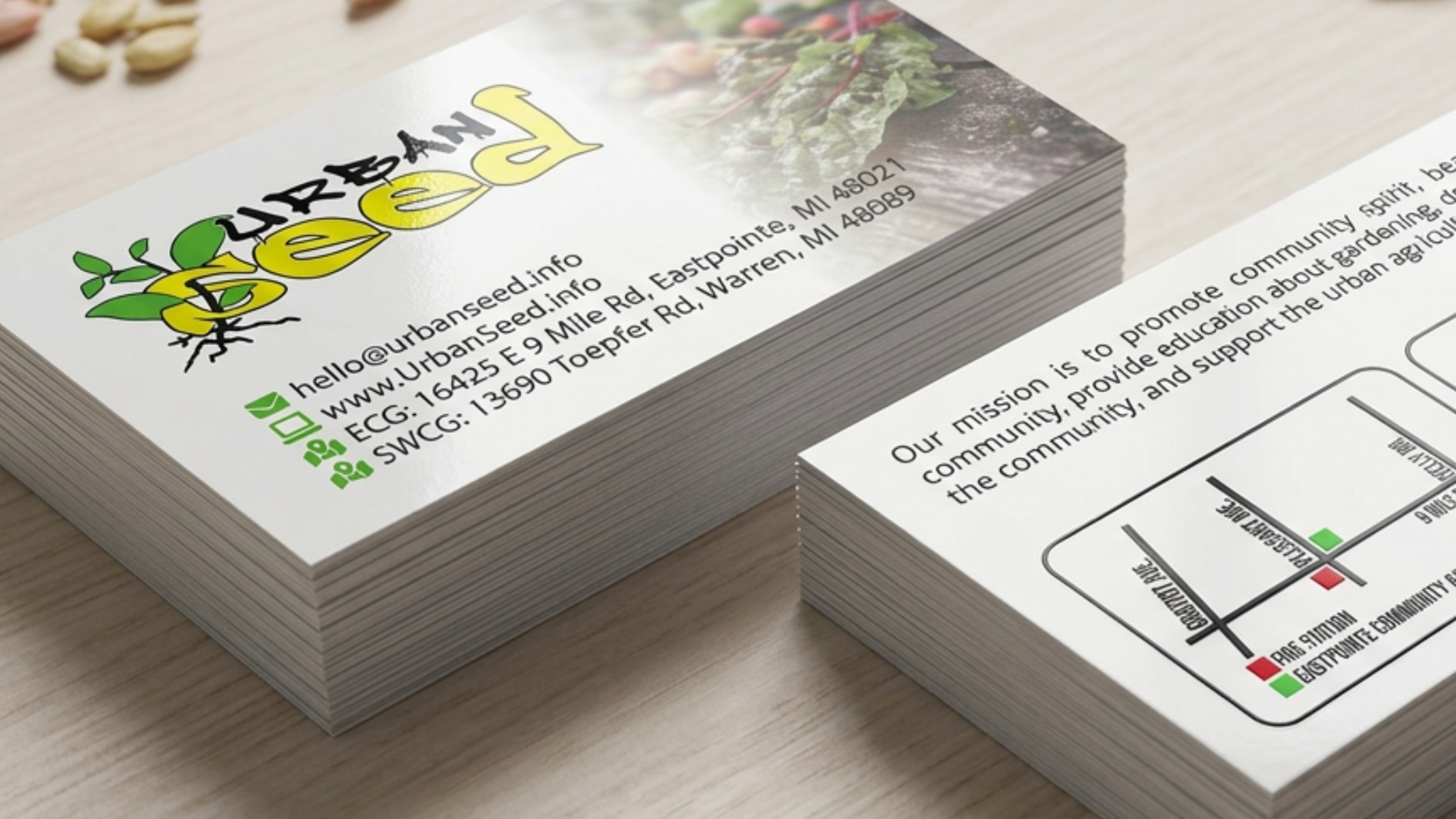
Professional design without losing culture
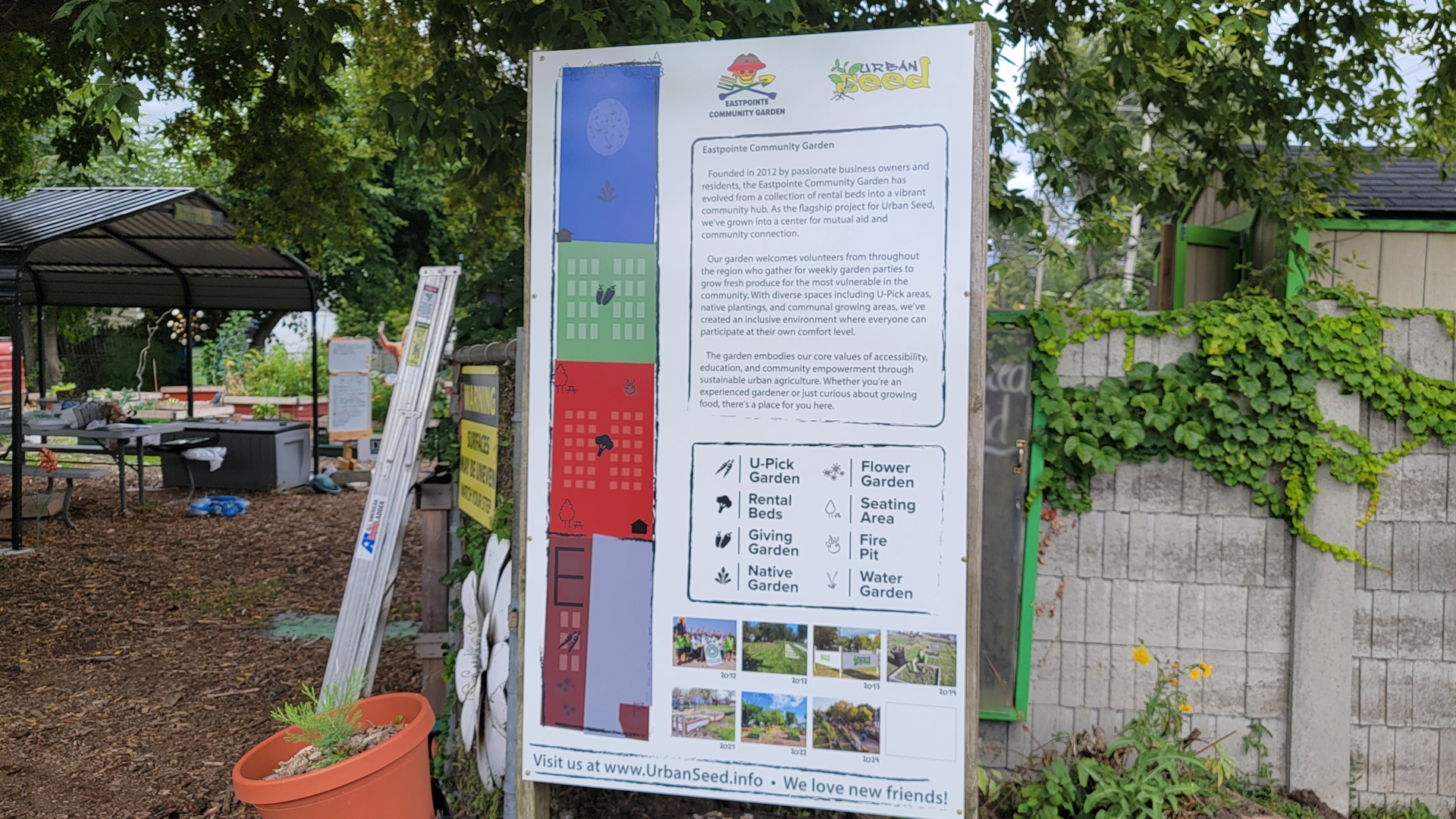
Wayfinding signage at the garden's front entrance
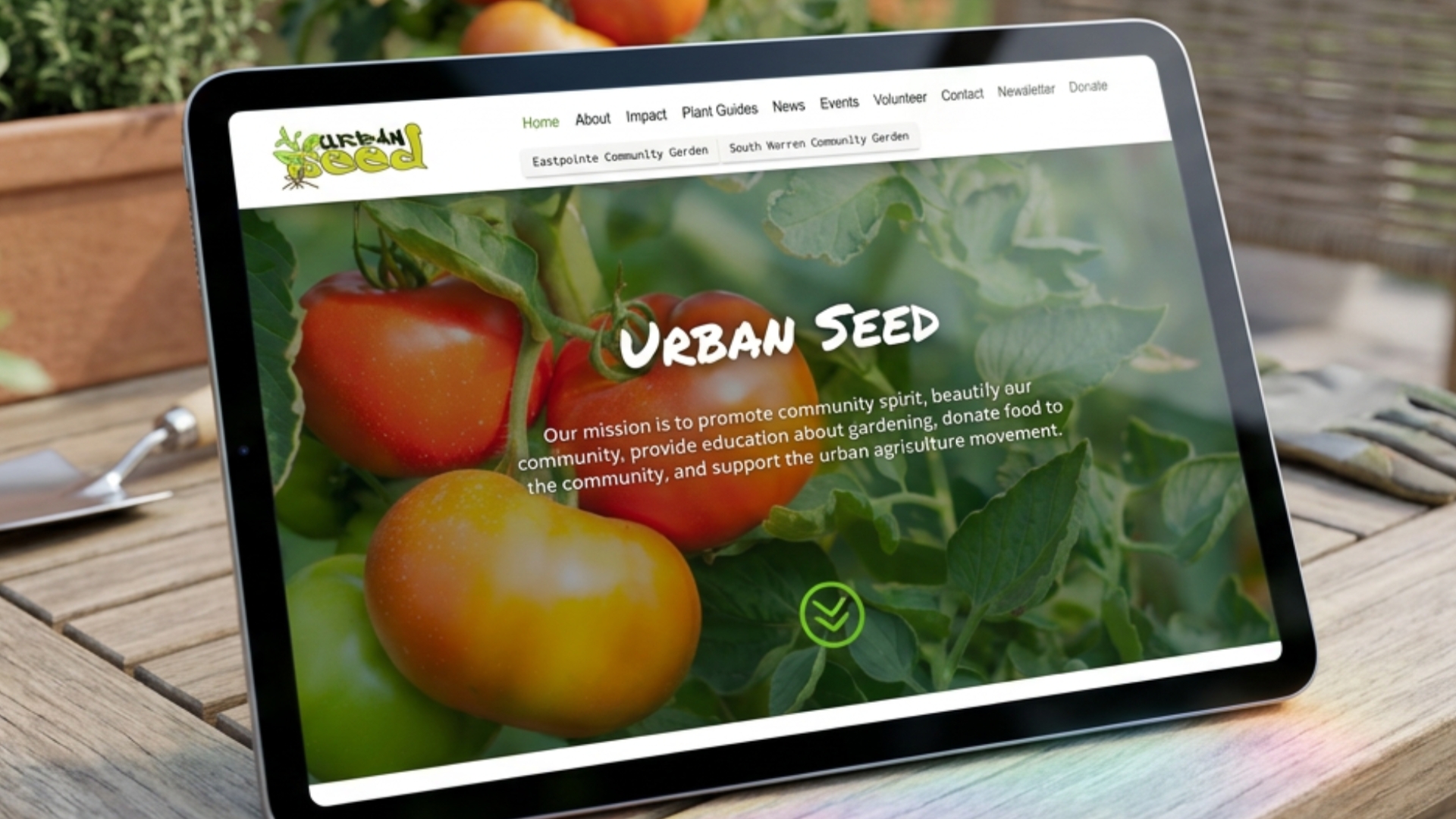
The website features independent landing pages for each garden
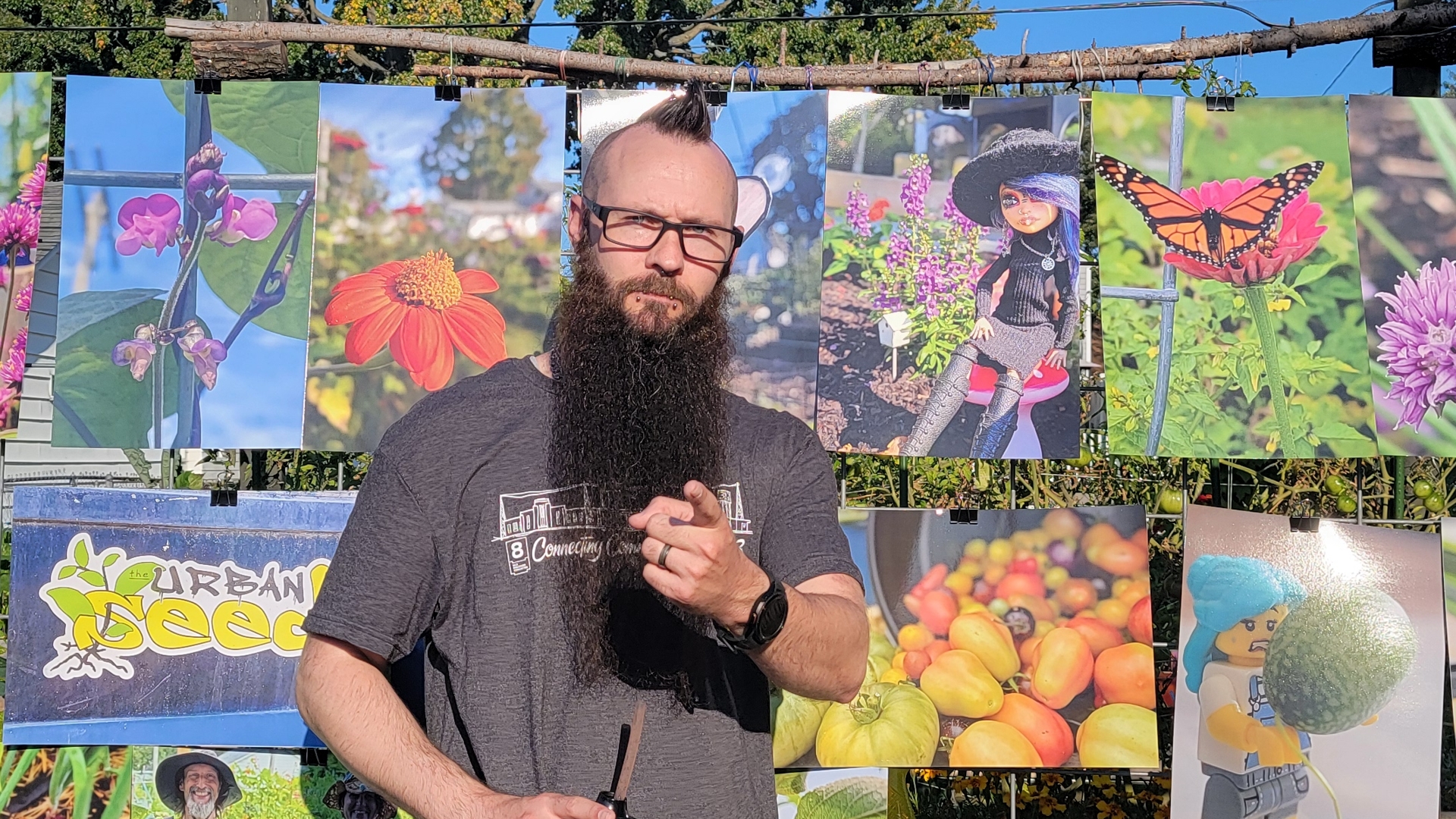
John Hofmann at "Art in the Garden" art show
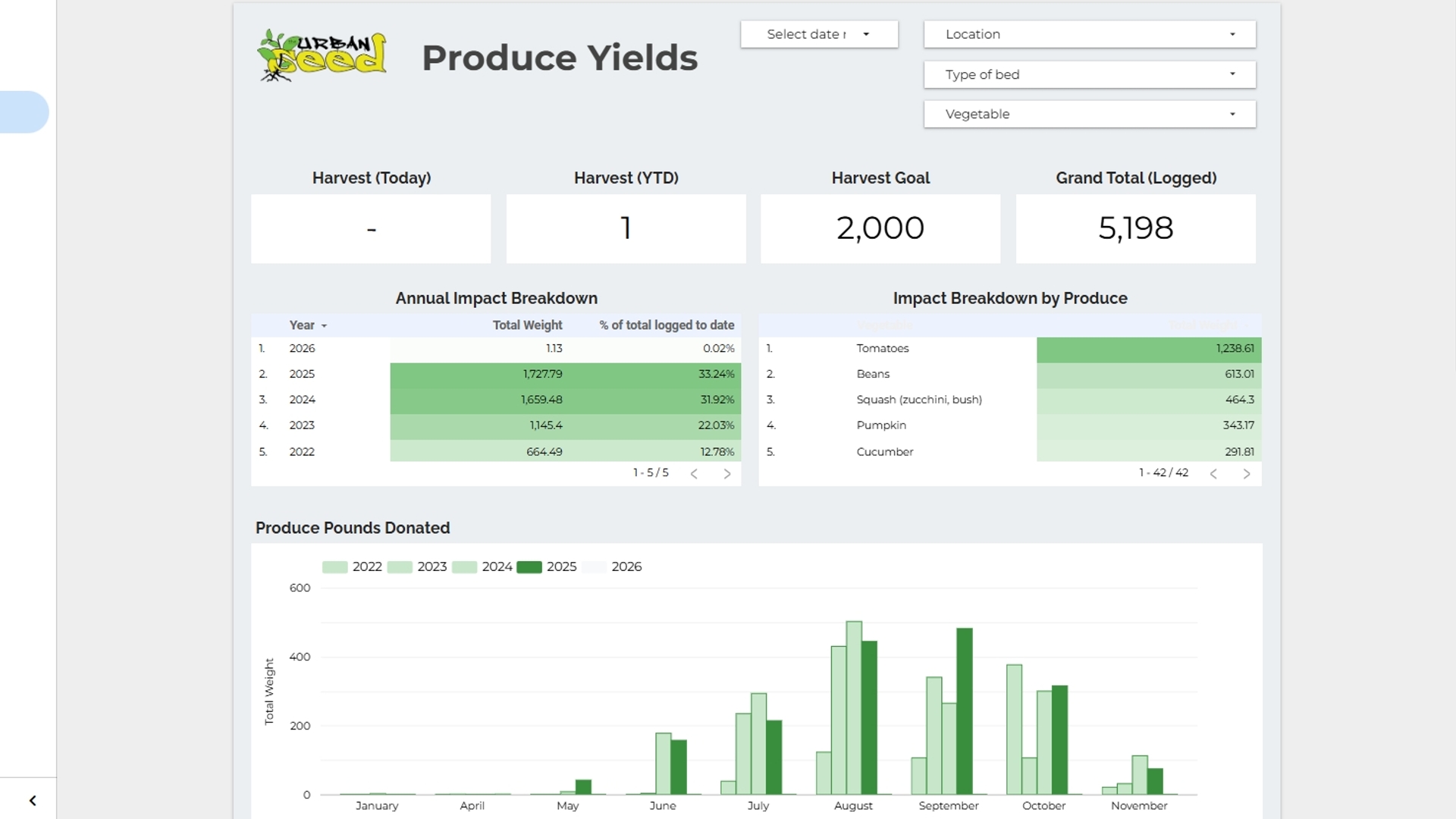
Impact dashboard with live updates
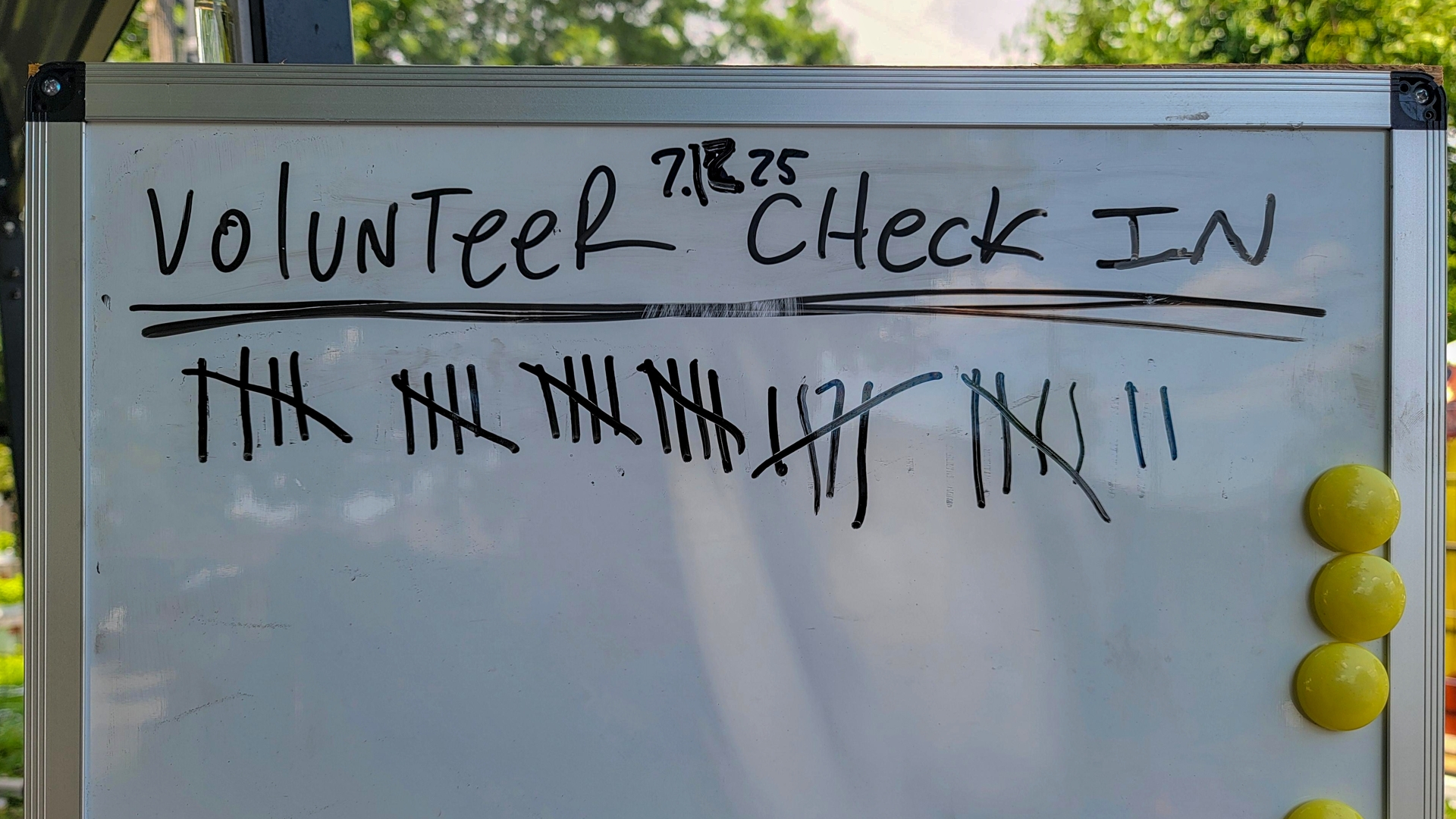
32 volunteers checked in
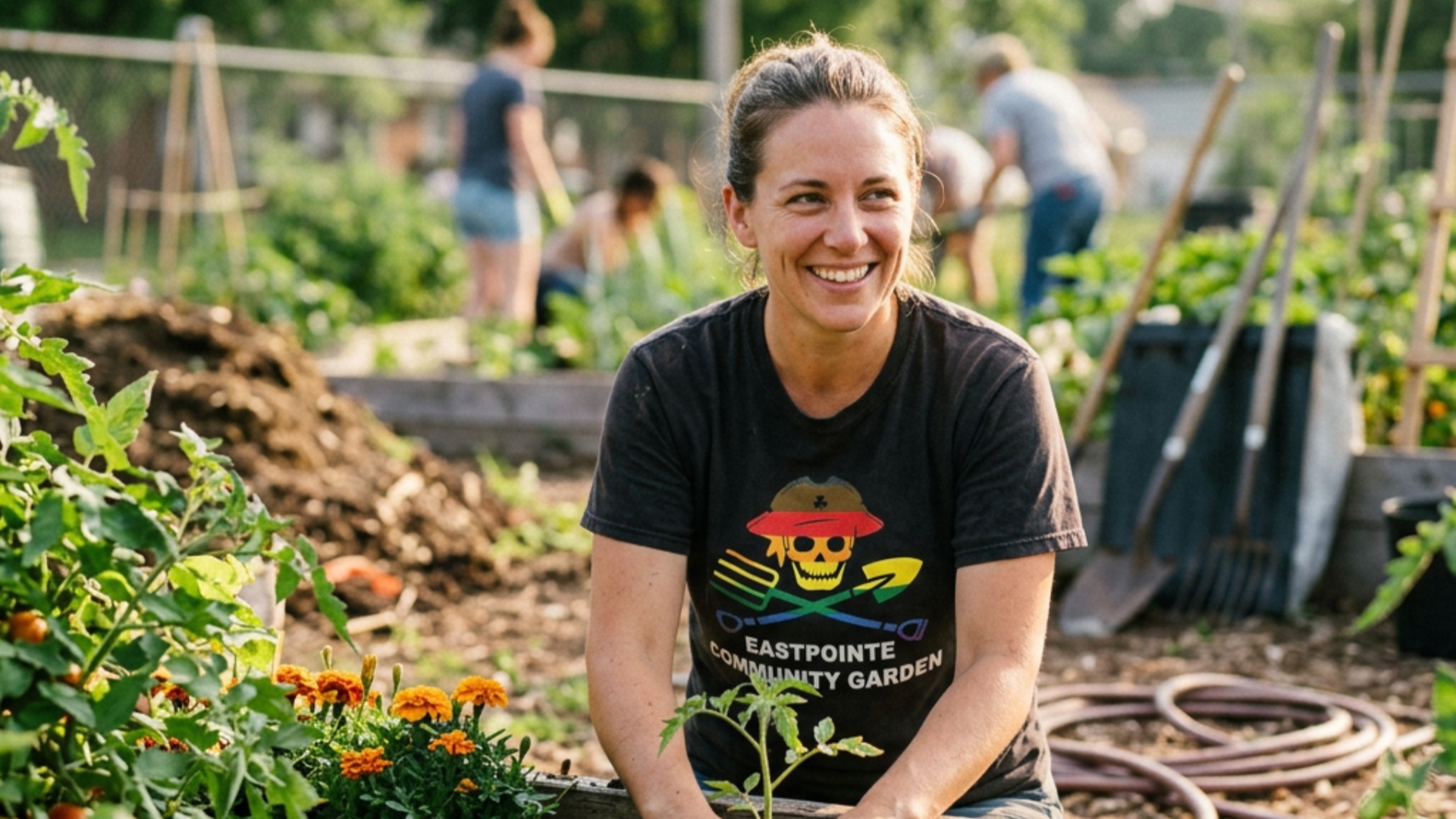
Garden Pirate logo for Eastpointe Community Garden
The Outcome
The proof is in what’s happened on the ground since the storytelling era began.
Volunteer participation exploded. Saturday workdays in Eastpointe grew from 3 or 4 regulars before 2021 to 20-40 volunteers showing up every weekend depending on the season. In 2025 alone, more than 3,000 volunteer hours were logged through self-reporting. Actual numbers are closer to 6,000-7,000 once you factor in unlogged hours.
The garden expanded to two cities. Eastpointe added beds, programming, and infrastructure over time. South Warren came online in 2025 as a second full location. The brand and operational systems scaled with both.
Institutional doors opened. Urban Seed was awarded a $10,000 Community First Grant from the Whole Foods Market Foundation as part of the 2025-2026 grant cycle, announced January 2026. Of the 94 recipient organizations across 75 cities in 32 U.S. states and one Canadian province, Urban Seed was the only Michigan-based nonprofit on the list. The application leaned heavily on the website storytelling and Impact Dashboard as proof of mission execution. That’s the proof point that matters most. Transparent, trackable impact is what unlocks institutional funding for a small nonprofit.
Long-term security in both cities. Urban Seed closed a 25-year lease with the City of Eastpointe for the flagship garden in 2024. In May 2026, the South Warren garden secured a 10-year lease after months of stalled negotiations – a fight that turned around in two weeks once the advocacy tool we built started sending community emails to City Hall and the press.
Real food, real impact. In 2025, over 1,700 pounds of fresh produce were donated through the giving garden’s produce stand. That’s only the food that was weighed and logged. Actual totals are significantly higher once you factor in you-pick harvests and unlogged volunteer work.
Press, awards, and recognition. Since the 2021 brand and storytelling overhaul, Urban Seed has earned consistent regional press coverage and stacked up the kind of recognition that takes a nonprofit from “known locally” to “credible to a grant reviewer.”
Press coverage includes WXYZ 7 Action News Detroit, ClickOnDetroit (Local 4 News), The Detroit News, and ongoing features in the Warren Weekly and Eastpointe Eastsider. Stories have covered everything from the 25-year Eastpointe lease in 2024 to the dramatic 2026 fight to save the South Warren garden.
The brand system now stretches across two garden locations with documented templates the volunteer team can execute consistently. The storytelling framework gives the organization a sustainable content engine that doesn’t depend on any one person. The dashboard turns the kind of impact that usually lives in scattered notebooks and group chats into something a grant officer or potential donor can see, sort, and trust. And the advocacy tool turns community goodwill into political action when it counts.
“Fusion marketing has helped Urban Seed grow by being there helping first hand with moving woodchips, helping with multiple physical projects. Along with marketing projects like flyers for events, business cards for the garden, and social media. Fusion has been a crucial asset to the organization and our community.”
– William Randazzo, President, Urban Seed
What's Next
The South Warren Community Garden is heading into its first full growing season with a 10-year lease secured, and we’re continuing to expand the dashboard, content library, and grant-ready storytelling system as Urban Seed grows. As the mission scales, the brand and tools scale with it.