
I asked a few AI tools what Fusion Marketing does. The answers weren’t wrong exactly. They were old. Directory listings from 2013 and 2014 were still doing some of the talking, years after we’d moved offices twice and changed how we do business. I caught it by accident, testing something else on our own site, the same way we test everything before we ever touch a client’s account.
If you’ve never asked an AI assistant what it knows about your business, you probably have no idea what it would say. Here’s how to find out, and what to do once you know.
Why does it matter what AI says about your business?
Because people are asking, and a lot of them are acting on the answer without double-checking it. A BrightLocal survey of US consumers found that 31% now use an AI tool at least monthly to get recommendations for local businesses, based on a July 2026 report covering over 1,200 respondents. That’s not a fringe behavior anymore. That’s roughly one in three people who searched for a local business recently.
Ranking well in Google still matters. Ahrefs found that 76% of pages cited in Google’s AI Overviews also rank in the top 10 organic results, in a July 2025 study of 1.9 million citations. But that leaves a real share of citations coming from somewhere else entirely, and “somewhere else” is usually a directory, a review site, or a listing you haven’t looked at since you set it up.
Where do AI assistants actually get their information?
Mostly your own website. Insites ran a 2026 audit of 10,000 US local businesses and tracked every source ChatGPT cited. Your website showed up in 72.3% of general questions about a business, and 50.7% of “who should I use” questions. Directories and listing sites filled in another 35 to 39%. Review sites mattered more once someone was deciding, not just asking: they jumped from 1.8% of citations to 11.51%.
Here’s the part that catches people off guard: AI doesn’t always reach for the most accurate source available. A Yext study found Google’s Gemini answered a question about a McDonald’s opening time using a Tripadvisor listing instead of Google’s own listing or the brand’s location page. The lesson isn’t that Tripadvisor beats Google. It’s that these tools pull from a wide mix of sources and don’t rank them the way you’d expect, so one clean, authoritative answer isn’t enough. You need the same information to show up consistently everywhere AI might look.
That consistency has a name in the SEO world: NAP, short for name, address, and phone number. When those three details match exactly across your website, your Google Business Profile, and every directory you’re listed on, AI (and Google itself) has more reason to trust what it’s reading. When they don’t match, 63% of people won’t bother reaching out to a business that shows them conflicting contact information, according to research cited by On The Map Marketing. Inconsistency doesn’t just confuse a search engine. It costs you the call.
What I found when I audited my own business
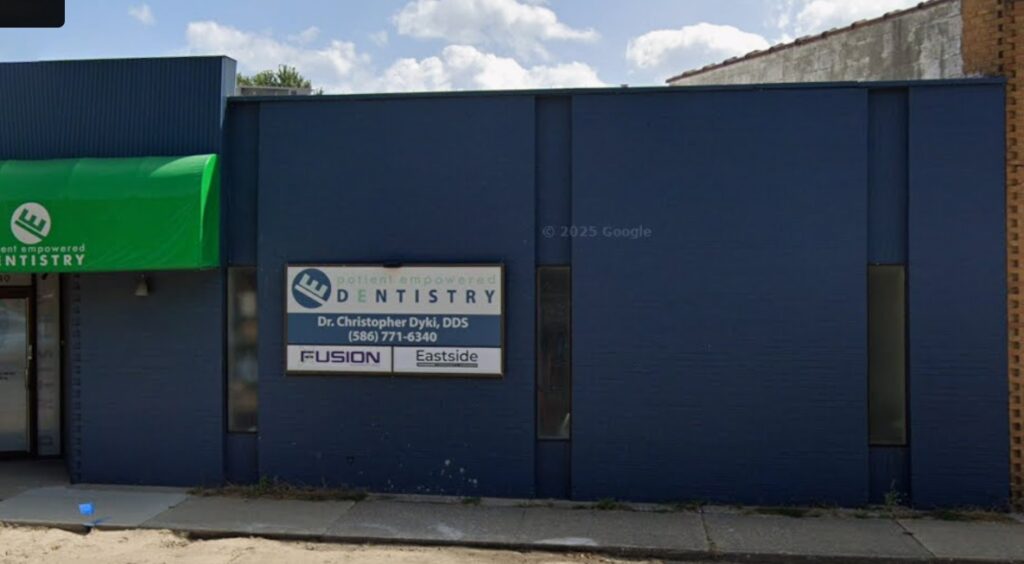
Fusion’s been through a few changes since we started in 2013. We were on Gratiot Avenue in Roseville, Michigan, a few miles up the road from where we are now. Then we moved to 10 Mile Road in Eastpointe. Then we moved again, back to Gratiot, this time at the corner of 10 Mile in Eastpointe, where our office sits today. Add a January 2026 restructuring where we narrowed what we offer, and you’ve got more than a decade of business details that changed multiple times.
Most of it got updated where it counts. Our Google Business Profile is current. Our main directory listings are current. But when we ran Fusion through a clean AI session, the answers pointed at directory listings from 2013 and 2014 that nobody had touched since we first set them up, back when we were a different company at a different address offering different services. In the best case, that’s just confusing. In the worst case, it’s actively wrong information representing us to someone who’s never talked to us before.
We’re always client zero here. We don’t run a tactic on a client’s account that we haven’t already tried on my own, and this is exactly the kind of blind spot that philosophy is supposed to catch. It still caught me by surprise. If a company that does this for a living can have stale listings nobody noticed for over a decade, yours almost certainly has a few too.

How to check what AI says about your business
You don’t need special tools for this, just a clean AI session, meaning one you’re not already logged into or mid-conversation with. A chat history full of your own business details will skew the test. Open a fresh session in ChatGPT, Gemini, Claude, or Perplexity, and paste in a prompt like this one:
I want you to research [Your Business Name], a [type of business] located in [City, State]. Based on publicly available information, tell me:

1. What does this business do, in your own words?
2. What is the business's current address, phone number, and hours?
3. What services or products does it offer?
4. Where did you find this information? List any specific sources, directories, or websites you're drawing from.
5. Is there anything in what you found that seems outdated, inconsistent, or contradicted by another source?

Be specific. If you're not confident about a detail, say so instead of guessing.
Run it in more than one tool if you can. Different AI assistants pull from different sources, so what Gemini says and what ChatGPT says won’t always match. Where they disagree is often exactly where your listings disagree too.
What to do with what you find
Start with your own website, since it’s the single most-cited source across the research above. Make sure your current address, phone number, services, and hours are stated in plain text somewhere a reader (and an AI tool) would actually find them, not buried in an image or a PDF.
From there, work through the directories the AI tool named. Update what’s wrong, and don’t stop at the big, obvious ones. The old, low-traffic directories are often exactly where decade-old information survives longest, because nobody goes back to check them.
Then check your Google Business Profile against all of it. Name, address, phone number, hours, and category should match your website and your directories exactly, down to how you abbreviate “Avenue” or “Suite.”
None of this is a one-time fix. Directories change, AI models update, and new listings appear without you asking for them. Treat it the way you’d treat any other maintenance task: check it, fix what’s wrong, and check again down the road.
Worth a second set of eyes
You can run this audit yourself in twenty minutes with the prompt above, and I’d genuinely rather you do that than not check at all. If you get through it and find a mess bigger than you want to untangle on your own, syncing directory listings and keeping a Google Business Profile accurate is something we already do for clients. Take a look at our own story if you want to see how much a business can change in a decade, and what that does to the information sitting around about it. Our reviews are current too, for what it’s worth. I checked.