We use AI for almost everything at this point. Not as an employee. As an intern.
That distinction is the whole argument for AI in graphic design, so let me put it another way. Think about a calculator. Can I do long division by hand? Absolutely. Does the calculator make it faster? Sure. But the real value isn’t speed. It’s that there are fewer chances for me to make a mistake. Nobody hands a calculator the whole accounting job and walks away.
Almost everything going wrong in my industry right now comes from people skipping that distinction. They’re handing it the whole job.
Where we actually use it
No point arguing this from behind a curtain. Here’s the honest inventory:
- Formatting articles
- Tightening my raw thoughts into something readable
- Sorting my email so the important things surface first, the way an executive assistant used to sort the mail. It isn’t writing or sending anything.
- Building mockups for our portfolio, or illustrating a concept for a client before we design it
- Cleaning up and commenting sloppy code, and refactoring old code
- Proofreading copy for typos
- Pre-production checks on print files, hunting for typos and tone-on-tone text against a background, plus the specific errors we’ve been burned by before
We also run a bit of automation named KITT. He sends reminders about art proofs, notices about delays, past-due notices, and links to finished files. He signs off as KITT, Fusion’s automation assistant, because clients should know when they’re talking to a robot.
Notice what isn’t on that list. AI isn’t designing anything. It isn’t deciding anything. It isn’t talking to clients on our behalf.
Does anyone actually need to disclose this?
My honest read is that in my industry, disclosure stopped being news a while ago. Everybody assumes everybody is using AI on something. Announcing it feels a little like announcing that you use spellcheck.
Google’s position is more useful than mine, and narrower than most people assume. Their guidance is that disclosure is worth adding when a reader would reasonably wonder how something was created, and that the quality of the work matters more than the method used to produce it. Not always. Situationally.
That’s a better test than mine, and it lands differently depending on what you made. Nobody wonders how your email got sorted. People absolutely wonder how the image in your ad got made. The closer AI sits to the thing a customer is actually looking at, the more the question is fair.
The best thing we use it for isn’t the obvious one
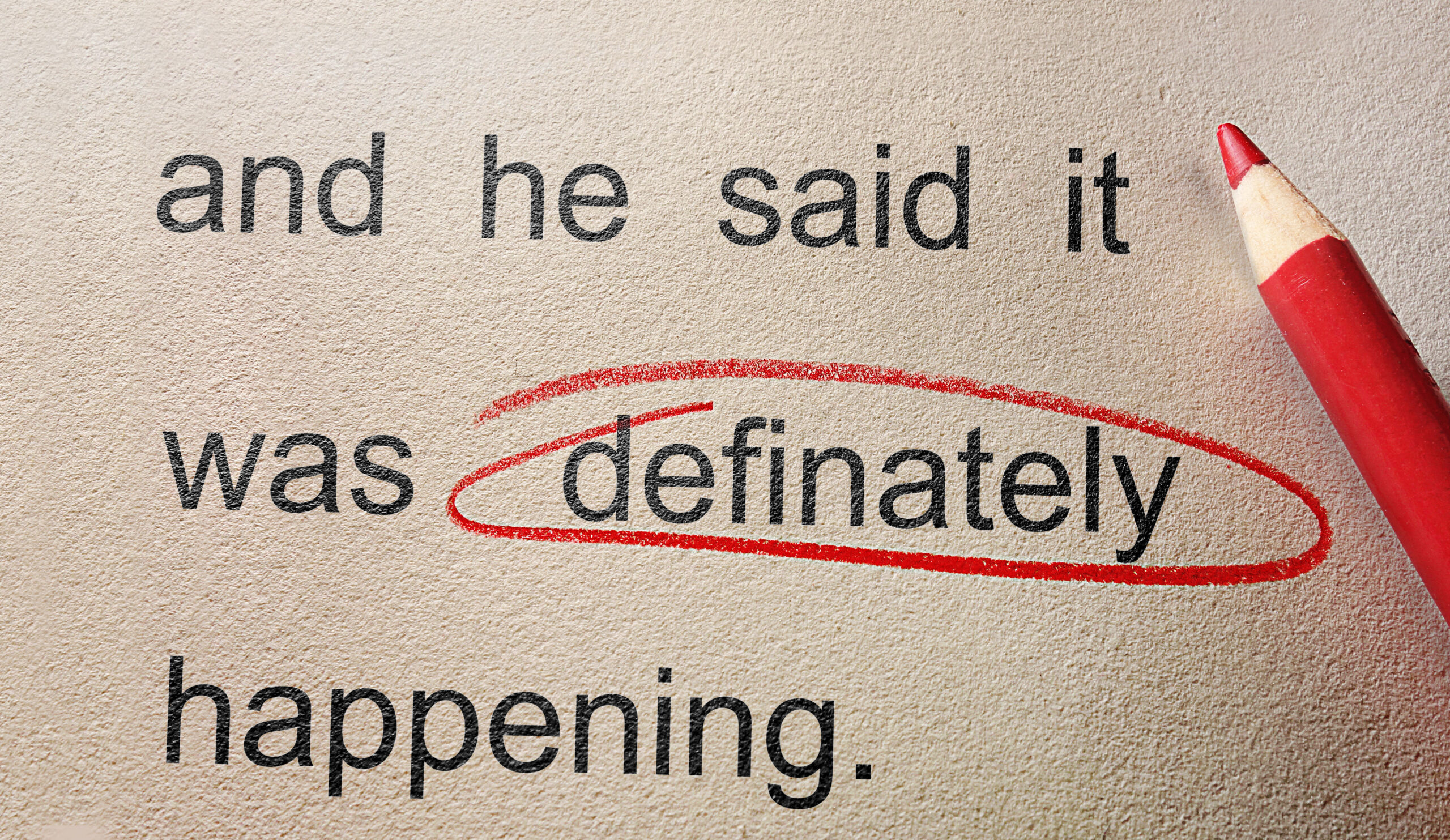
Spell-checking artwork before it prints.
That sounds boring next to image generation. It isn’t. The human brain is remarkably good at correcting typos on the fly and skipping past missing punctuation. You read what you meant to write. Two designers and a client can all approve a proof with a misspelled street name sitting in the middle of it, and nobody catches it until five thousand copies come off the press.
A machine doesn’t read what you meant. It reads what’s there.
Same logic on the code side. Migrating something old, cleaning it up, making it more efficient. That isn’t creative work. It’s tedious work where accuracy matters and attention drifts. Exactly what an intern is for.
Why you have to know the job to use AI for the job
Here’s the catch-22 sitting at the center of all this.
To use AI well on a task, you have to already be capable of doing that task. Otherwise you can’t tell when it’s wrong. You also can’t tell when it’s right, which is the part people forget.
I’d never tell somebody to have AI write a legal document. You don’t know what you don’t know. But a lawyer using it to bang out a rough draft before editing it themselves? Completely different situation. They know what the arguments should sound like. They know what ironclad reads like. They’ll catch what’s missing.
Take it out of my industry entirely. Picture an office manager who is excellent at their job. Fast in Excel, runs a calendar beautifully, handles the whole Microsoft suite. What they’re not great at is QuickBooks. So the moment AI can handle QuickBooks, they hand it over, because they never fully understood what was happening in there anyway. That works right up until tax time, when it turns out things have been reconciled in the wrong place for eight months. They had no way of knowing.
AI presents everything with the same confidence. The correct answer and the wrong answer arrive in the same tone of voice. Confidence is not accuracy, and if you can’t do the job yourself, confidence is all you’ve got to go on.
What people are getting wrong right now
A lot of people are treating AI like a CMO or a lead designer. They hand over a whole job, let it run, and don’t have the skill to evaluate what comes back. So nothing gets checked.
If designing a logo is ten steps, AI belongs in step one or two. It’s where pencil sketches go. It’s the same slot as pulling a logo design book off my shelf and flipping through historical marks to see if anything sparks. A place to generate options nobody is going to ship.
The failure isn’t using the tool. It’s promoting the tool.
Is hating AI the new marketing strategy?
I love this shift, and I think it’s mostly honest, with one funny wrinkle.
The wrinkle is that most people are using AI to make their own jobs easier while complaining about other people using AI to make their jobs easier. I watch it happen in Facebook community groups and on LinkedIn constantly. A small business posts a generic AI flyer, and the comments fill with customers saying they won’t shop there, they won’t attend, they’re done. Some of those comments were almost certainly written with ChatGPT.
Hypocritical. Also not wrong.
The reaction makes sense because the flyers really do all look the same. When every business in town posts the same glossy, slightly-too-smooth image, none of them stand out and all of them look like they didn’t try.
The sameness problem isn’t confined to small business, either. Reviewing the year’s biggest identity work, design director Bentzion Goldman of Mother Design argued that branding has gone safe and sanitised, and that what stood out about the major rebrands was how unremarkable they were. That’s the same disease at a different budget level.
The pushback is showing up at the top of the industry too. Apple’s new television ident was built with real glass and shot entirely on camera, no CGI and no AI. And when Pentagram publicly embraced generative AI in part of their creative process, the backlash was immediate. Anti-AI is now a legitimate market position at every level.
Now the part where I implicate myself.
We handled the rebrand for Eastpointe Community Schools, including new logos for the elementary schools. To show the work on social media, we generated an image of the logos sitting on printed sheets of paper. The artwork was ours. The photo of the artwork was AI. Somebody called us out for it publicly.
Same thing has happened with our logo mockups. The industry has used mockup templates forever, and a template was never a real photograph either. But when the mockup comes from AI, it becomes a point of friction, even when the logo inside it was drawn by a person.
I don’t think those people were being unreasonable. I think the ground is shifting under a practice the industry stopped questioning a long time ago, and I’d rather say that out loud than pretend the criticism didn’t land.
Why being human is worth more than it’s ever been
Back in 2020 we made a deliberate decision to humanize this company. That’s when I stepped out front and became the face of it. We could see where things were heading, and what we bet on then is playing out now.
People want to do business with people. They’ll pay more for it.
I was talking recently with a colleague who runs an insurance agency. One of the biggest reasons she’s winning right now is that she has a building you can walk into, and when you call, a human answers. Same human when you call back in six months. That’s the whole advantage, and it’s enormous, because everybody else has a phone tree.
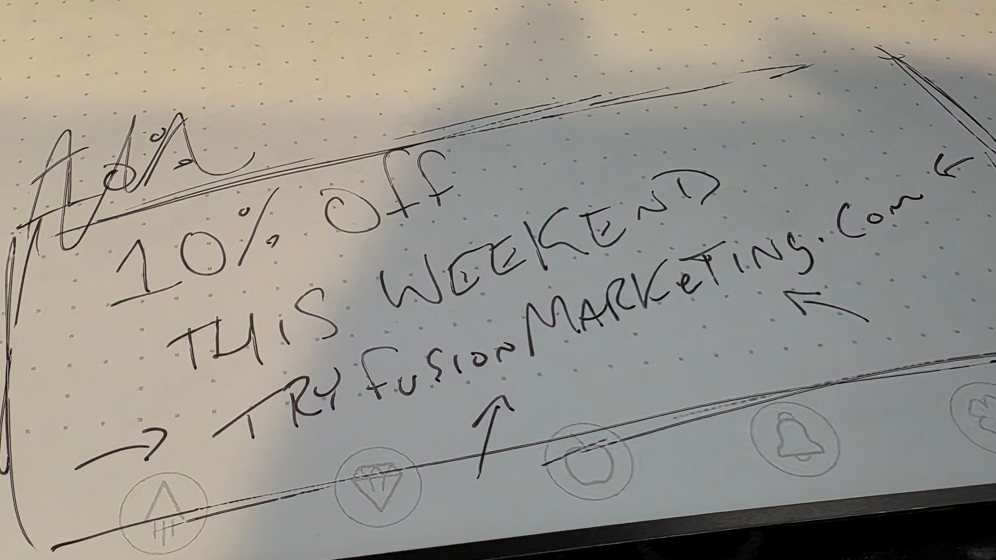
You can see it in advertising too. I keep noticing businesses writing an offer on a sheet of copy paper with a Sharpie, photographing it, and running that as the ad. Ten percent off Friday. Buy one, get one. It stops the scroll, because everything around it is polished and identical and none of it looks like a person made it.
We’re tired of fighting automated phone systems to reach a human. We’re tired of ordering from a robot. A recognizable person doing a recognizable thing is starting to feel like a luxury.
What it changed inside our shop
The honest case for this technology, in our shop, is accessibility.
Shay needs to see something before she can judge whether it works. Describing a concept to her doesn’t get there. Historically that meant building the whole thing just to find out she didn’t like it. Now she looks at a rendering in a few minutes, reacts, and we move. That isn’t a shortcut. It’s removing an obstacle that had nothing to do with her ability.
I’ve got my own version. Writing has always been hard for me, not for lack of thoughts but because getting them out of my head in order is the part I’ve struggled with. Now I talk for forty-five minutes, dump everything, and work it into an outline and a draft I can edit. This article exists because of that. The thinking is mine. The transcription and the first pass at structure are not.
That’s the version I’ll defend all day. It didn’t replace anybody here. It removed two specific obstacles for two specific people.
So where does AI actually belong?
Brainstorming. The iterative front end. The part before anybody commits to anything.
It’s genuinely useful when a client has gone back and forth with ChatGPT and arrives with reference images. That’s not a problem, that’s a gift. They can show me what they’re chasing instead of describing it, which is no different from bringing in screenshots from Google two years ago. It makes talking to another human being easier, which is the entire point.
When we built the Pairadox Project logo, we reached for everything. Drawing shapes. Sketching on paper. AI to flesh out directions. Biology books and diagrams of molecules. Anything we could get our hands on. Then we designed the actual logo by hand on a grid.
Every one of those inputs did the same job. Not one of them made the decision.
That’s the test. If AI is generating options, you’re fine. If AI is making the call, you’d better be able to make that call yourself, or you have no idea what you just shipped.
Frequently asked questions
Is it wrong for a designer to use AI?
Using it isn’t the problem. Where it sits in the process is. AI belongs at the front end, generating options during brainstorming and concepting. It becomes a problem when it makes decisions nobody qualified is reviewing.
Should a business disclose that it used AI?
Google’s guidance is that disclosure is worth adding when a reader would reasonably wonder how something was created. In practice that means the closer AI sits to what the customer is looking at, the more disclosure is warranted. Nobody needs to know how your email got sorted. People fairly wonder about the image in your ad.
Why do AI-designed flyers and logos all look the same?
Because they’re drawing on the same training data and responding to similar prompts. The output converges. That sameness is exactly why handmade and low-fi creative is cutting through right now, and it’s the reason customers can spot AI creative in a feed without being told.
Can AI replace a graphic designer?
Not for work that requires judgment about where a design has to function, what it costs to reproduce, or how it differs from competitors. It can replace parts of the labor. To use it well on design work, you already have to be capable of doing that work, which is why it augments experienced designers and misleads everyone else.
The short version
AI shouldn’t replace people. It should augment what people are already good at.
Use it to generate options, catch your mistakes, and get past obstacles that have nothing to do with your actual skill. Don’t use it to make decisions you couldn’t make yourself. Anything past that and you’re outsourcing judgment you never had.
If you want to know how we think about this on the client side, our take on what to look for before hiring a logo design company covers the same ground from the buying end. And if you’d rather just talk to a person about it, that’s still an option here.